International Crane Foundation — Baraboo, Wisconsin

3
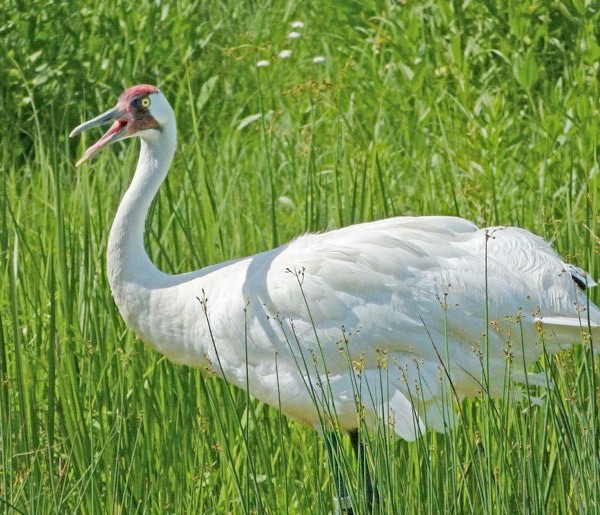
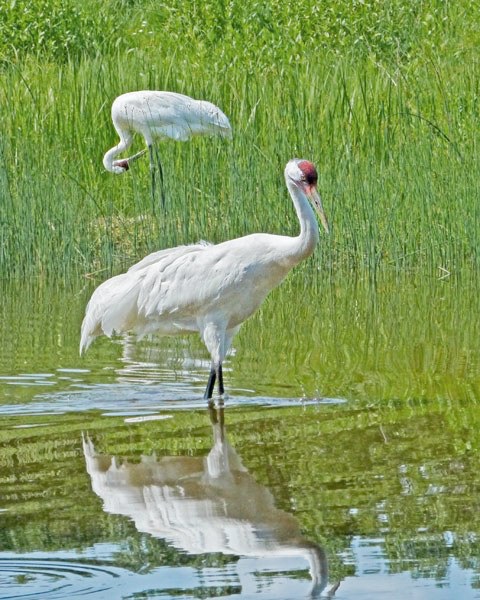
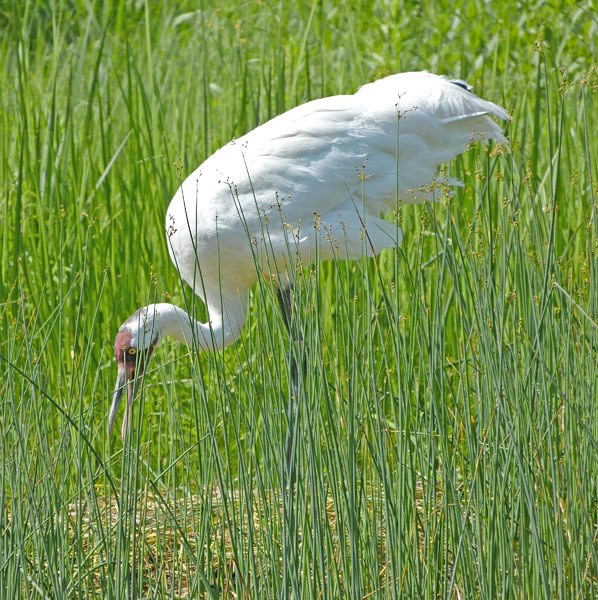
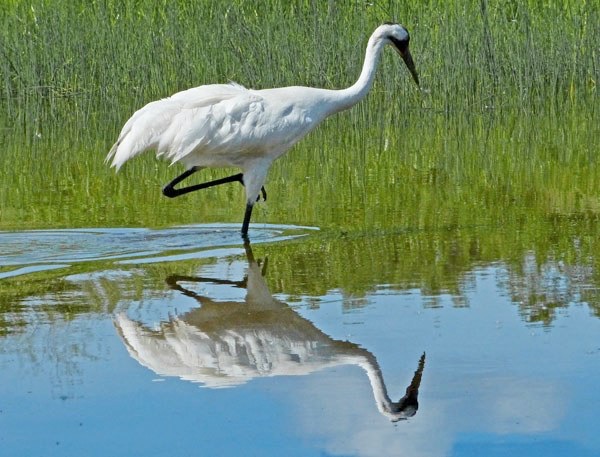
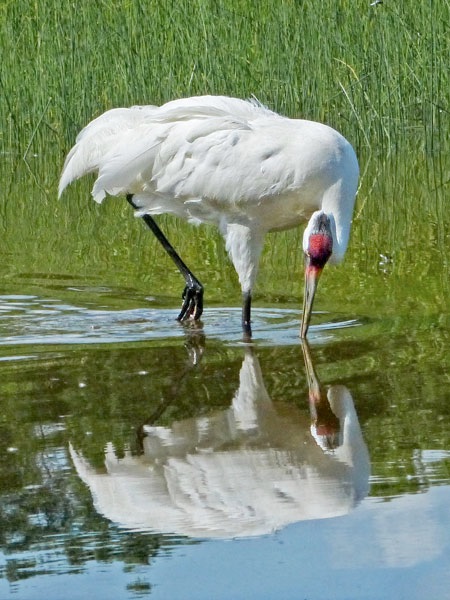
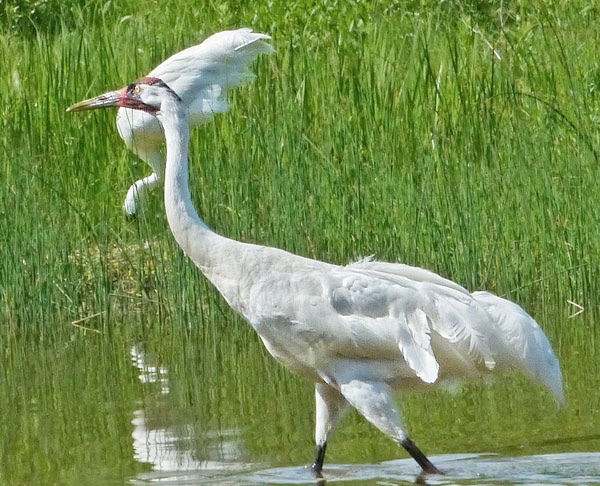
On to the Whooping Crane exhibit, which was unique in that it had a covered seating area where people could comfortably relax and watch a pair of nesting Whooping Cranes.
Recovering from a low of
only 21 birds in the wild in
the 1940s to around 600 birds
today, while still very much
an endangered species, the
Whooping Crane's recovery
is one of conservation's most
inspiring success stories.
This is an exclusively North American crane, with two distinct migratory populations: one summers in northwestern Canada and winters along the Gulf Coast of Texas; the other makes central Wisconsin its
summering grounds, then heads to the southeastern United States during the winter—individuals from that group pass over my house within the
Sandhill Crane flocks.
Small, non-migratory populations live in central Florida and coastal Louisiana.
One crane tended the nest, arranging the dried reeds to suit some instinctual pattern of weave that the bird finds satisfying.
The other bird went fishing.